
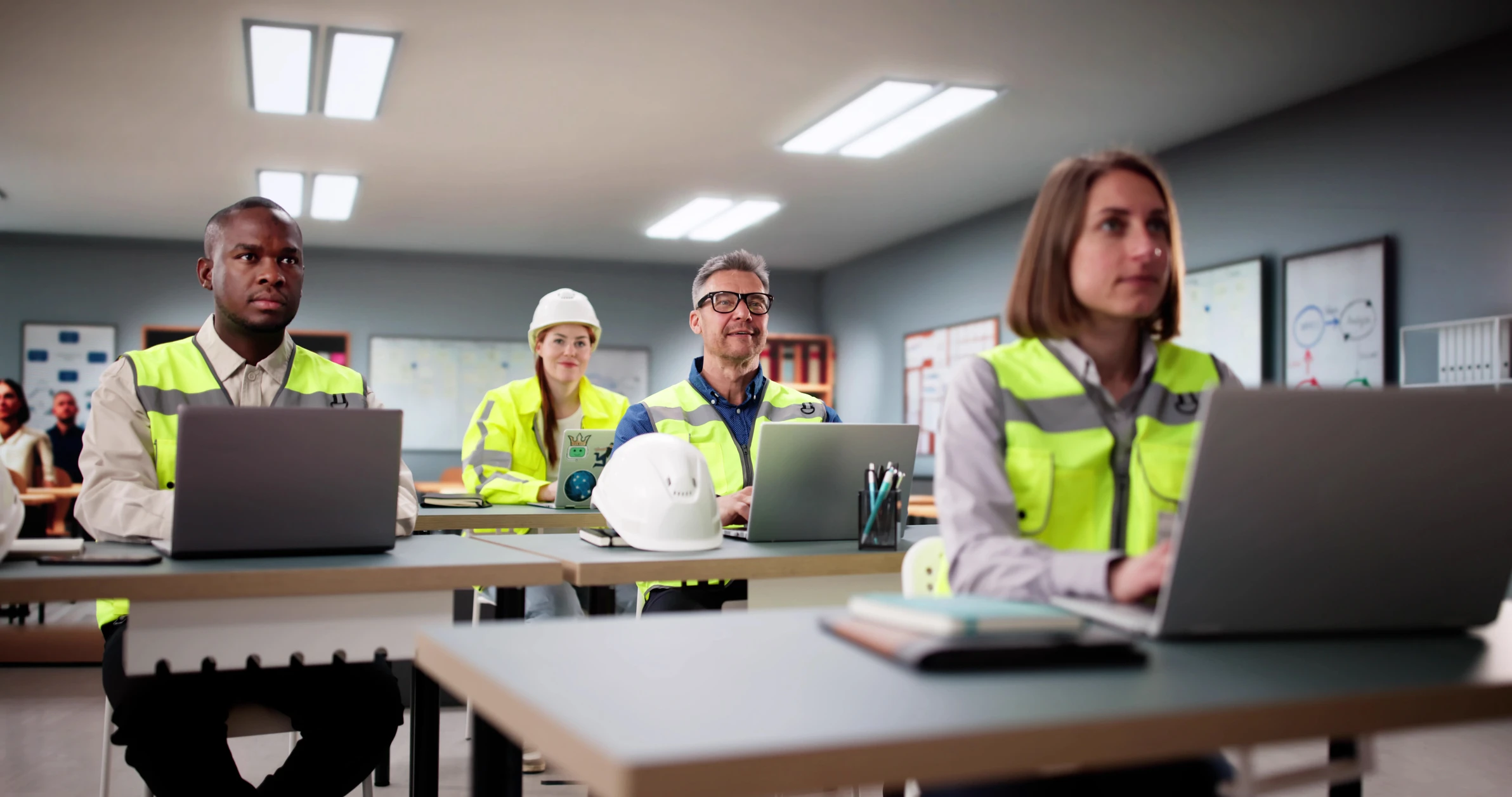
Both work. But one might be a better fit for how your operation runs.
If you’ve been looking at supervisor development programs, you’ve probably run into this question: should we do in-person or virtual?
It used to be an easy answer. Then the world changed, and virtual delivery got a lot better. Now there are legitimate reasons to go either direction. Here’s how to think about it.
What In-Person Gets Right
There’s something real about getting people in a room together. Side conversations happen. Relationships form. A supervisor from one shift connects with one from another and realizes they’re dealing with the same problems.
In-person also tends to produce more energy. A skilled facilitator can read the room, adjust in real time, and push people into uncomfortable territory in a way that’s harder to replicate on a screen.
If your supervisors are local, if you have a training space, and if you can pull people off the floor without disrupting the operation, in-person is worth considering.
What Virtual Gets Right
Virtual delivery has improved significantly. Done well, it is not a lesser version of in-person. It is a different format with its own strengths.
The biggest one is access. If your operation runs multiple shifts, multiple sites, or has supervisors spread across geographies, virtual makes participation possible without requiring travel or massive schedule disruption.
Virtual programs also make it easier to run consistent cohorts over time. When a new supervisor gets promoted six months from now, they can join the next virtual cohort without waiting for an in-person session to be scheduled.
Cost is a factor too. No travel, no venue, no meals. That budget can go toward better content and better facilitation.
The Question That Actually Matters
Before you choose a format, ask this: what delivery model will make it easiest for your supervisors to actually show up, stay engaged, and apply what they learn?
A well-designed virtual program beats a poorly-run in-person session every time. And a highly engaged in-person cohort will outperform a virtual session where people have their cameras off and are answering emails.
Format matters less than execution.
What to Look for in Either Case
Regardless of delivery, the design principles are the same. Sessions should be spaced out over weeks, not crammed into a single event. Supervisors should have time between sessions to practice on the job. Managers should be involved in reinforcing learning. And the content should feel like it was built for the people in the room.
If a program doesn’t meet those criteria in-person, it won’t meet them virtually either.
===
The Front Line Leadership program is available in both formats. If you want to see how it’s structured and which delivery model might fit your operation, visit frontlineleadershipprogram.com.